Choosing the right air purifier requires matching specific technical specs to your actual room conditions, not just following marketing hype. This guide helps you avoid overbuying unnecessary features or underbuying essential capacity.
Focus on Clean Air Delivery Rate (CADR) and filter types like True HEPA and Activated Carbon. These metrics determine real-world performance for smoke, dust, or odors. By prioritizing these factors, you ensure the unit effectively handles your primary air quality concerns without wasting money on inflated claims.
Determine Your Room Size and Air Quality Goals
Start by calculating your room’s volume. Measure the length, width, and height in feet. Multiply these three numbers to get the total cubic feet of air. A standard bedroom might be 12 by 10 by 8 feet, resulting in 960 cubic feet. This figure is the baseline for matching the purifier’s capacity to your space. Do not rely on square footage alone; ceiling height significantly impacts the total volume the unit must process.
Next, identify your primary air quality concern. This diagnostic step dictates the filter combination you need. If dust and pollen are the main issues, a True HEPA filter is essential. For pet dander, a robust Pre-filter captures larger particles before they reach the main filter. If tobacco or wildfire smoke is the problem, high CADR ratings for smoke are critical. Odors from cooking or pets require Activated Carbon filtration, which adsorbs gases that particles filters cannot capture.
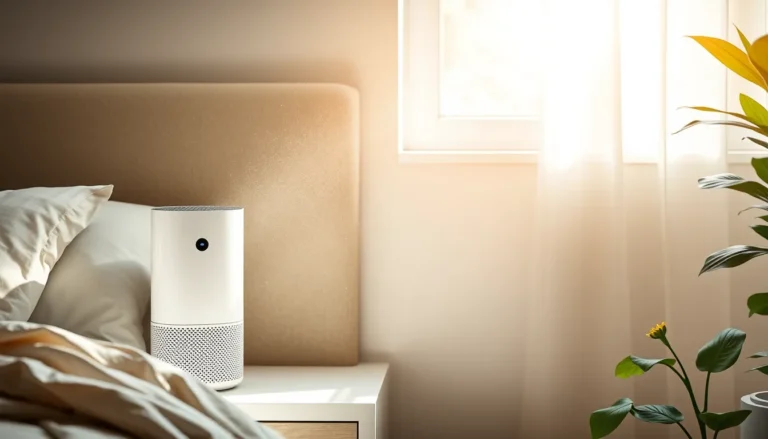
One size does not fit all. A compact unit suitable for a small closet or nursery will struggle in a large living room with high ceilings. Conversely, placing a massive industrial-grade purifier in a tiny bathroom is inefficient and noisy. Match the device to the specific environment. A bedroom purifier typically needs less power than one serving a shared living area. Consider where you spend the most time. If you sleep in a small room, prioritize a unit that achieves high Air Changes per Hour (ACM) in that specific volume to ensure clean air while you rest. This targeted approach prevents underbuying, which leaves pollutants lingering, or overbuying, which wastes energy and money on excess capacity you never use.
Understanding CADR: The Most Important Number
Clean Air Delivery Rate (CADR) is the single most reliable metric for evaluating an air purifier’s actual performance. Unlike marketing claims, CADR measures the volume of clean air a unit delivers per minute, specifically for dust, pollen, and smoke. It is expressed in cubic feet per minute (CFM). A higher CADR indicates a faster cleaning speed, but the number only matters relative to your specific room volume.
To select the right unit, apply a simple calculation. Multiply the room’s length, width, and height to get the total cubic feet. For effective air quality improvement, the purifier’s CADR rating should be approximately one-third to one-half of that total volume. For instance, if your room is 300 cubic feet, you need a unit with a CADR between 100 and 150 CFM. This ratio ensures the machine can cycle the air sufficiently to remove contaminants without running at maximum capacity constantly, which reduces noise and energy consumption.
Avoid relying solely on "room coverage" figures listed in square feet. Manufacturers often inflate these numbers by assuming ideal conditions or using low fan speeds that do not achieve meaningful Air Changes per Hour (ACM). A unit claiming to cover 500 square feet might have a CADR too low to actually clean that space effectively. Square footage ignores ceiling height, meaning two rooms with the same footprint can have vastly different air volumes. By focusing on CADR, you bypass misleading marketing and match the machine’s physical output to the real-world air volume you need to treat. This prevents the common mistake of buying a unit that looks large on paper but fails to clear the air efficiently in your specific environment.
Selecting the Right Filter Combination
Filter stages work together to treat different types of pollutants. Understanding their distinct roles helps you prioritize features that match your specific air quality concerns rather than paying for redundant capabilities.
The first line of defense is the pre-filter. This mesh layer captures large visible particles like hair, pet dander, and lint. By trapping these coarse debris before they reach finer filters, the pre-filter extends the lifespan of the more expensive main components. It is easy to clean or replace, making it a low-maintenance part of the system.
The main filter handles the microscopic threats. A True HEPA filter captures 99.97% of particles as small as 0.3 microns, including pollen, mold spores, and smoke particles. Be cautious with terms like "HEPA-like" or "HEPA-style," which often indicate lower efficiency standards that do not meet the rigorous requirements for capturing fine particulate matter. If allergies or respiratory sensitivities are your primary concern, True HEPA is non-negotiable.
Finally, the activated carbon filter addresses what HEPA cannot: gases and odors. This porous material adsorbs volatile organic compounds (VOCs), cooking smells, and smoke odor. It does not remove particles. Therefore, if your main goal is dust control, a robust carbon filter adds cost without significant benefit. However, if you cook frequently or have smokers in the household, a substantial carbon layer is essential for removing lingering smells that particle filters miss. Match the filter emphasis to your dominant pollutant source.
Noise Levels and Operational Features
Noise is the most common reason air purifiers end up in closets. Fan speed directly dictates both cleaning power and sound output. A unit running at maximum speed to achieve a high CADR will inevitably be louder than one operating on a low setting. Before buying, check the manufacturer’s decibel (dB) ratings for each fan speed, not just the maximum. If the number exceeds your comfort threshold for bedrooms or home offices, the unit may be unusable in those spaces during occupied hours.
Look for features that simplify long-term operation. Automatic sensors for PM2.5 or VOCs allow the device to adjust fan speed based on real-time air quality, maintaining efficiency without manual intervention. Sleep modes are essential for nighttime use, typically reducing fan speed to a near-silent level while continuing basic filtration. Filter life indicators are also valuable; they prevent you from running a saturated filter, which reduces efficiency and can potentially release captured particles back into the air.
However, do not let convenience features drive your primary purchase decision. Smart app connectivity, colored LED displays, and timer functions are nice to have, but they do not improve air quality. Prioritize a machine that meets your CADR and filter requirements first. If the unit is too loud or lacks a reliable quiet mode, no amount of smart connectivity will make it a viable solution for daily living. Ensure the core performance matches your room needs before evaluating secondary amenities.
Long-Term Costs: Maintenance and Energy Use
Long-Term Costs: Maintenance and Energy Use
The sticker price of an air purifier is only the beginning. To understand the true cost of ownership, you must account for ongoing maintenance and energy consumption. Overbuying a larger, more expensive unit often leads to higher replacement costs without providing proportional benefits to your specific room size.
Focus on the filter types. Pre-filters are usually washable, which extends their life and reduces waste. Simply rinse them under water when they become clogged with dust or pet hair. In contrast, True HEPA and Activated Carbon filters are disposable. They capture fine particles and odors that cannot be removed by washing. These main filters typically require replacement every six to twelve months, depending on usage intensity and local air quality. Budget for these replacements annually. Ignoring this schedule compromises the unit’s CADR performance, forcing the fan to work harder and reducing its effectiveness.
Energy consumption is another factor to consider. While most air purifiers use less power than a standard light bulb, many people run them continuously to maintain air quality. Running a unit twenty-four hours a day for a year adds up on your electricity bill. Check the wattage specification. A lower-wattage model that meets your required Air Changes per Hour (ACM) will be more efficient than a high-powered unit running at maximum capacity unnecessarily. Match the power output to your actual needs to avoid paying for excess performance you do not utilize.